
A Gate on 81st Street
998 Fifth Avenue is a beautiful McKim, Mead & White building on the corner of 5th and 81st. Completed in 1912, the building exemplifies Gilded Age urban living.
998 Fifth presents itself with clear classical and Italianate allusions, the most obvious being it’s strong rusticated base at street level, and its increased ornamentation upon ascent. Interestingly, the developer of the project was James T. Lee, Jackie Kennedy's grandfather. His aim was for the building to read as unbothered high-class living, an urban palazzo quietly fitting in to cap a street full of townhomes. These objectives came to fruition gracefully, and the evidence is in the finished product. The structure is a suitable addition to the row of buildings visible from Central Park across the avenue.
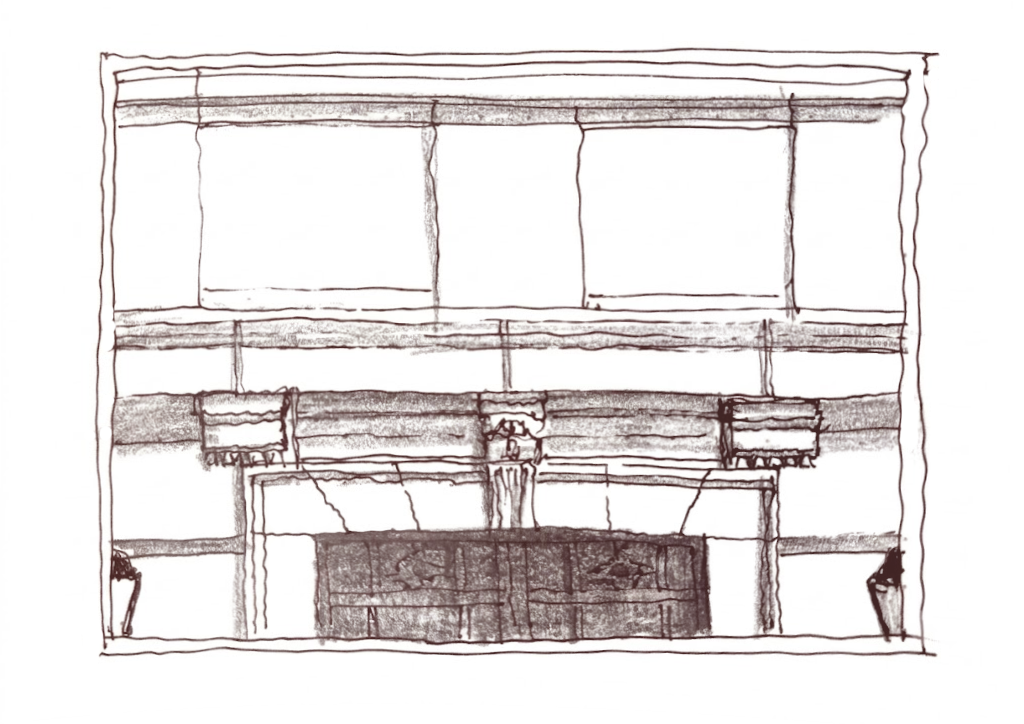
However, to me, the building’s most charming moment is around the corner where there is a small gate house that could easily be missed. This service annex is the part of the building that nobody is meant to look at. What I found interesting was that the building’s famous titular architects didn't really design it. A firm man named William Richardson did as the rest of the office was busy planning the Met's north wing right across the avenue. The addition feels extremely human in contrast to the enormous building to which it’s attached.
The main reason for my appreciation and what made me notice it in the first place is its use of mannerism. A classical entablature typically consists of three things: architrave on the bottom, frieze in the middle, cornice on top. The frieze is typically the most prominent band, the one that might feature the triglyphs and any other relief-based ornamentation. On the gate house it just isn't there. The cornice comes down almost straight onto the architrave, and the whole composition ends up compressed, like someone left a word out of a sentence on purpose. The only remnants of the frieze are the taenia, regulae and guttae, which exist below where the triglyphs otherwise would be.
It's mannerism in the proper sense, the work of someone who knows the canonical classical structure intimately and then poetically removes a line to see if anybody’s paying attention. A full entablature here would have looked like the gate house putting on airs. Leaving the frieze off does the opposite. It makes the little annexed building more humble and appropriate, a well designed addition who’s order slightly degenerates in keeping with its function.
That’s really the whole appeal. The most unique part of the building is sitting by the service door, and the best part of it was deliberately left off.
A Scan of the Gate House Facade, on the North Side of 81st and 5th.
A closer look at the door, with more visible ironwork.
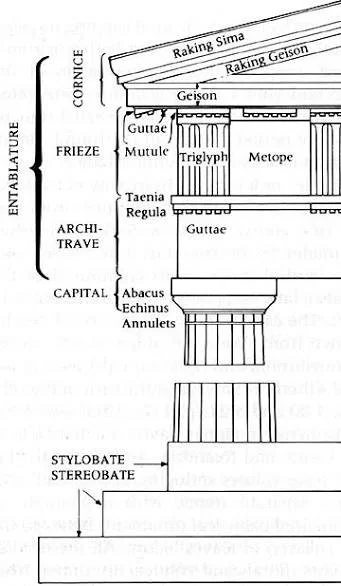
A breakdown of the Doric order, notice the Taenia, Regula and Guttae and observe how the Gate House omits the Frieze above.
